
Door Mount Dog Door Installation: A Complete Guide
How to Install a Dog Door in an Interior or Exterior Door
Complete DIY Guide to Door Mount Pet Door Installation
Step-by-step instructions for installing a pet door into solid or hollow wood, steel, fiberglass, and composite exterior or interior doors.
⏱️ Estimated Time: 1–2 Hours | 🔧 Difficulty: Moderate | 👤 People Needed: 1

Before You Begin
Installing a dog door in an exterior door is one of the most straightforward pet door projects. Whether your door is wood, steel, fiberglass, or composite, the process follows the same general steps: measure, mark, cut, and mount. This guide walks you through every detail so you can complete the job confidently.
📋 Things to Consider Before Installation
- Door Material: Wood doors are easiest to cut. Steel and fiberglass doors require specific cutting tools and techniques. Composite doors vary, check manufacturer specs before cutting to determine the best cutting tool.
- Door Thickness: Most pet doors accommodate standard 1⅜″ to 1¾″ doors. Measure your door thickness before purchasing to ensure compatibility.
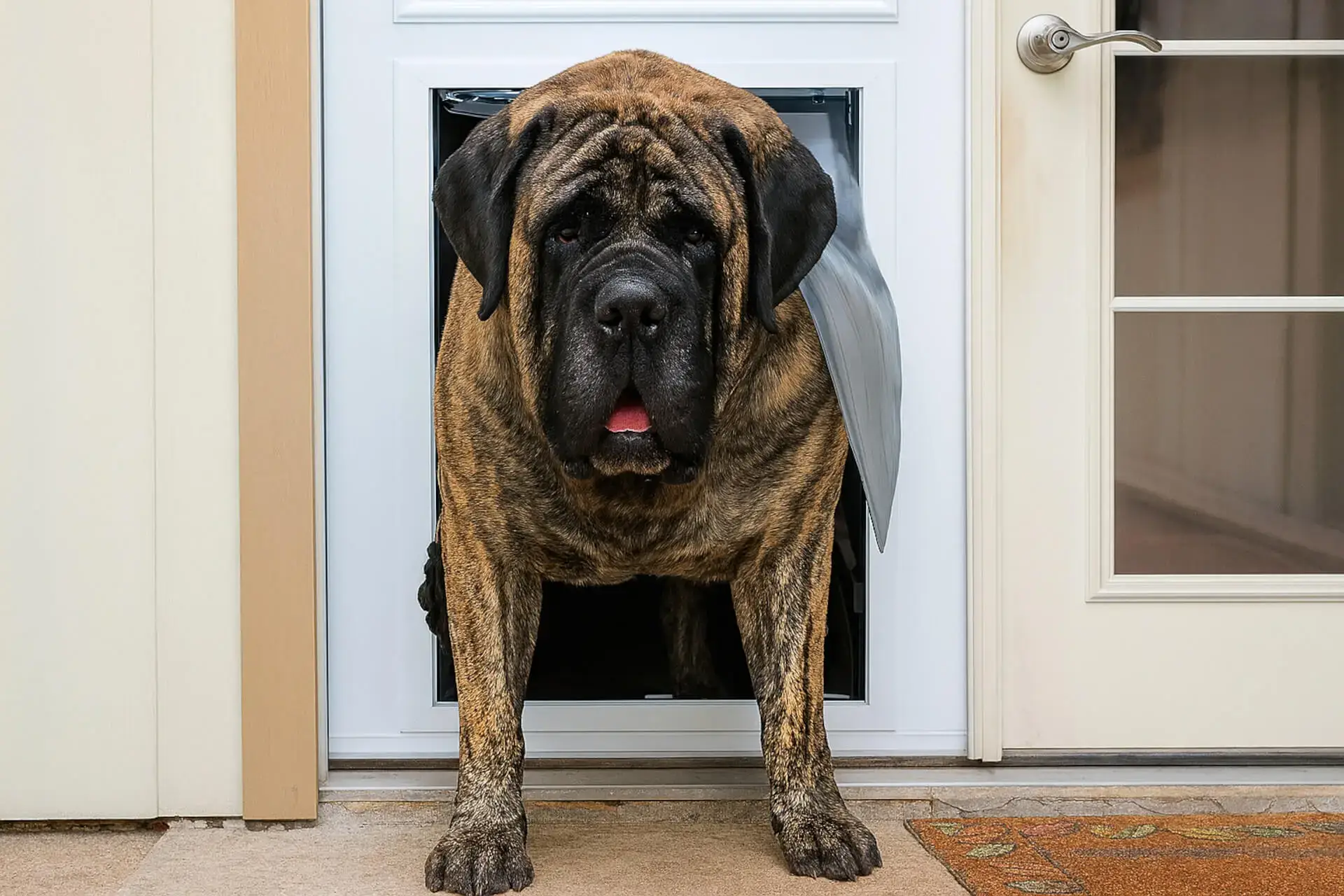
- Pet Size: Measure your pet from the floor to the top of their shoulders (withers), then add 1–2 inches. The bottom of the pet door flap should sit no higher than your pet's belly height (ideally at least 1/2" of clearance).
- Door Integrity: Cutting into a steel door removes structural material. Choose a pet door with a sturdy frame that reinforces the cut area.
- Weatherproofing: Your exterior door is a critical part of your home's thermal envelope. Choose a pet door with dual-flap insulation and magnetic seals (like MaxSeal™) to minimize energy loss.
- Security: Look for pet doors with good locking security panels. This lets you lock the pet door at night or when you're away.
- Warranty: Cutting into your door may void the door manufacturer's warranty. Factor replacement cost into your decision if the door is new.
- Rental Properties: If you rent, get written permission from your landlord before cutting into any door. Consider a patio door insert as a no-modification alternative.
Tools & Materials You'll Need
🔧 Tools
|
📦 Materials
|
Step-by-Step Installation Instructions
Step 1: Measure Your Pet
 |
Accurate measurements ensure your pet can use the door comfortably:
|
Step 2: Choose the Mounting Location
Position the pet door on the lower portion of your exterior door. Keep these guidelines in mind:
- Center the pet door horizontally on the door (unless hardware, decorative paneling or structure prevents it). If there is decorative paneling, applying caulk to the recessed gaps can fill the gap. For larger gaps we recommend backer rod, or foam bumper and then caulk.
- Maintain at least 2 inches of door material between the cutout edge and the door's edge or bottom rail.
- Avoid cutting through the door's structural stiles (the vertical framing pieces on each side).
- For doors with glass inserts: You may need to position the pet door below the glass, be sure to verify the clearance.
Step 3: Mark the Cut Line
|
 |
Step 4: Drill Starter Holes
At each corner of your traced outline:
- Drill a ½″ or larger hole just inside the cut line. These are your jigsaw starter points.
- For steel doors: Use a metal-rated drill bit and go slowly to avoid warping the steel skin.
- For wood doors: A standard wood drill bit works fine.
- Clear away any debris from the holes before proceeding.
Step 5: Cut the Opening
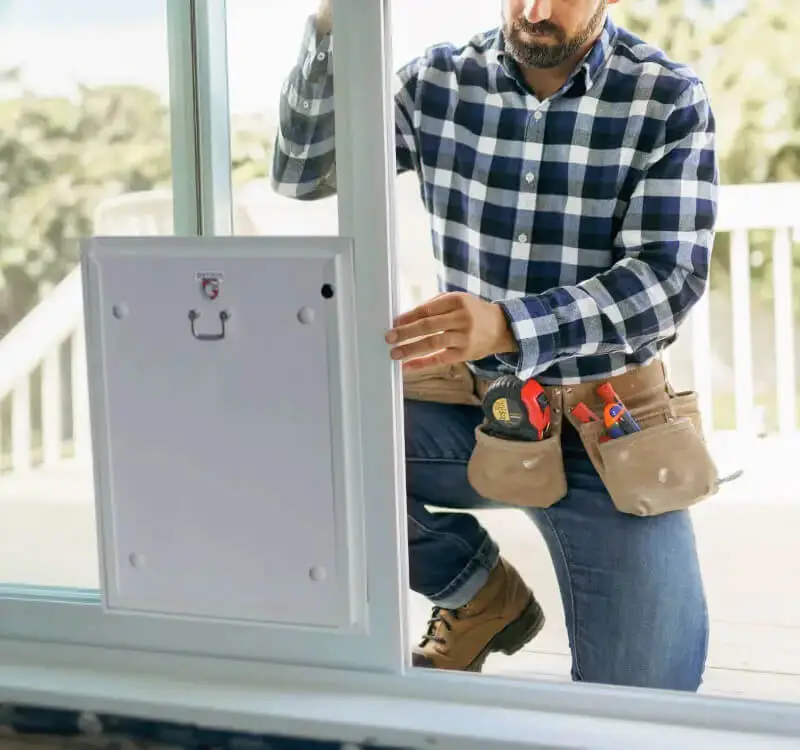 |
|
Step 6: Smooth the Cut Edges
- Use a file or sandpaper to smooth all cut edges. This removes splinters (wood) or sharp burrs (steel).
- For steel doors: Smooth edges thoroughly – cut steel is extremely sharp. Wear gloves.
- Apply touch-up paint or primer to exposed wood or bare metal edges to prevent moisture damage and rust.
- Test-fit the pet door frame in the opening before securing anything. the interior and exterior frames should slide in snugly.
Step 7: Install the Pet Door Frame
|
 |
Step 8: Insert the Security Panel and verify Flap Swing
- Verify the flap swings freely in both directions and returns to the closed (sealed) position with magnets.
- Insert the locking security panel – slide it into the interior frame tracks and test the lock mechanism.
- Check the magnetic seal along the bottom of the flap. It should close flush against the frame.
Step 9: Test and Train Your Pet
- Open the flap manually and encourage your pet to walk through with treats or a favorite toy.
- Hold the flap open at first so your pet sees the opening clearly.
- Gradually let the flap close more each time until your pet pushes through independently.
- Most pets learn very quickly, but be patient and use positive reinforcement.
💡 Tips & Tricks
- Test-fit before caulking: Dry-fit both frame halves before applying any sealant. This confirms alignment and lets you adjust if needed.
- Use painter's tape as a cutting guide: Tape along your cut line to reduce splintering and give the jigsaw a smoother track.
- Steel door insulation: Steel doors are often foam-filled. After cutting, you may need to remove some foam insulation from the cut area. A utility knife works well for this.
- Don't over-tighten screws: Especially on fiberglass and composite doors, over-tightening can crack the material. Snug is sufficient.
- Consider flap direction: Some pet doors have flaps designed to open in one direction only. Verify the swing direction before final mounting.
- Save the cutout piece: If you ever remove the pet door, the cutout piece can be used as a patch with filler and paint.
⚠️ Common Mistakes to Avoid
- Cutting too close to the door edge: Maintain at least 2 inches from the door's edge. Cutting too close weakens the door and may prevent the frame from sealing properly.
- Leveling the pet door instead of matching the doors level: You do not want to level the door, you want to level it with the full door. If the full door is not level, and you level the pet door, it will look odd. We suggest fixing the full door's level and then leveling the pet door to the full door.
- Wrong blade for the material: A wood blade on steel will dull instantly and can break. Always match the blade to your door material.
- Forgetting to seal: An unsealed installation lets air, water, and insects potentially into your home. Caulk all edges thoroughly.
- Measuring the pet incorrectly: Measure at the shoulders, not the head. A pet door that's too small is frustrating and unusable for your pet.
When to Call a Professional
While door-mount installations are manageable for experienced DIYers, consider professional installation if:
- Your door is a steel or fiberglass insulated model and you're not comfortable cutting metal/composite
- The door has internal reinforcements, decorative glass, or structural elements near the cut zone
- You want a guaranteed weatherproof seal and don't have caulking experience
- Your pet requires an oversized or custom-sized opening
- You want to preserve your door's warranty with a certified installation
Portal Pros installs door-mount pet doors nationwide.
📞 Call 855-DOG-DOOR for a free estimate.
🛒 Shop Door-Mount Pet Doors • 📅 Book Professional Installation
Request a Free Door Mount Dog Door Installation Quote
Fill out the form below and a Portal Pros representative will get back to you promptly.