
Custom Dog Door Installation: A Complete Guide
How to Install a Custom or Oversized Pet Door
Complete Guide to Custom Built & Oversized Dog Door Installation
Planning and installation guidance for non-standard pet doors: giant breeds, unique openings, replacing existing pet doors, unusual materials, and specialty projects.
⏱️ Estimated Time: Varies by project | 🔧 Difficulty: Medium to Advanced | 👤 People Needed: 1–2+
Before You Begin
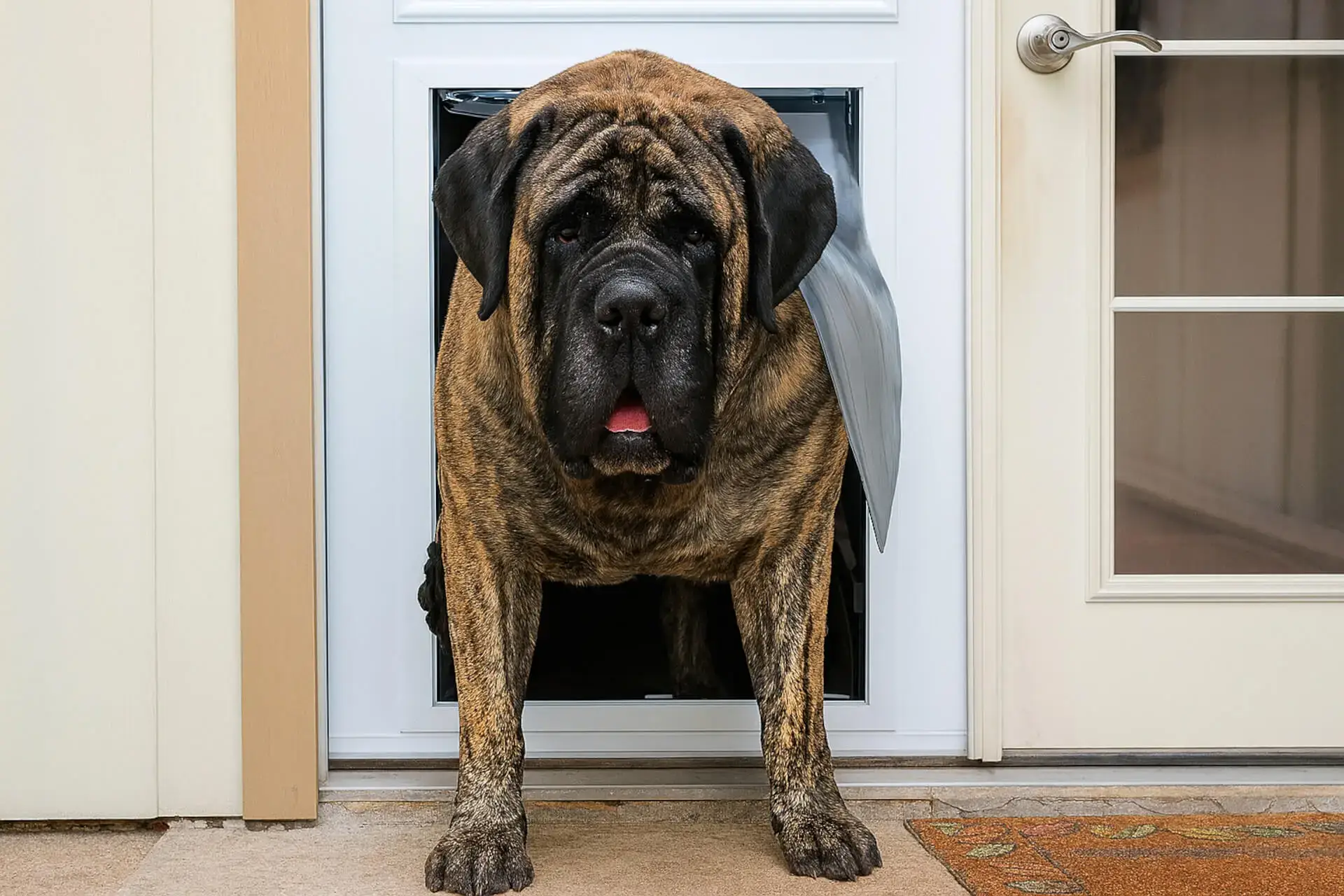
When standard pet door sizes and mounting methods don't fit your needs, a custom or oversized pet door is the answer. This guide covers the unique planning, engineering, and installation considerations for non-standard pet door projects, including giant breed accommodations, unusual wall and door materials, atypical opening shapes, and specialty environments.
📋 When You Need a Custom Pet Door
- Giant Breeds: Great Danes, Irish Wolfhounds, Saint Bernards, Mastiffs, Newfoundlands, and other breeds that exceed standard XL pet door dimensions (typically 15″ wide × 23″ tall maximum for standard models). The MaxSeal PRO is available in a 15 3/4" x 32" to accommodate most large breeds, but every dog within a breed can be different!
- Unusual Wall Construction: Log homes, stone walls, adobe, ICF (insulated concrete forms), SIPs (structural insulated panels), rammed earth, or specialty construction materials.
- Extra-Thick Walls: Walls thicker than 12 inches (common in older homes, commercial buildings, and earth-sheltered homes) require extended tunnel systems up to 16" deep.
- Non-Standard Doors: Round-top doors, Dutch doors, pocket doors, barn doors, or doors with unusual dimensions or materials.
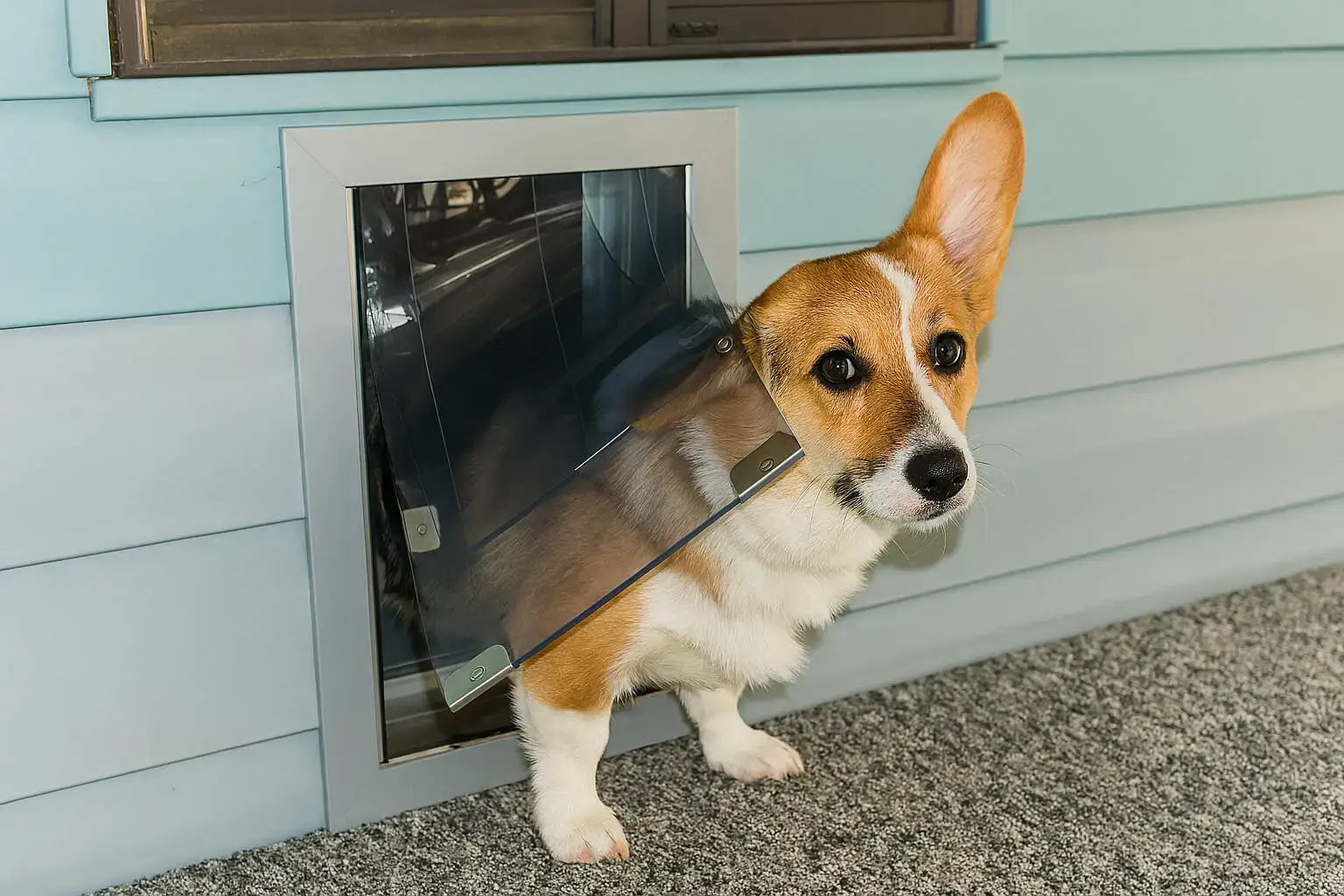
- Multi-Pet Sizing: Homes with both very large dogs and cats, requiring a door that accommodates both comfortably.
- ADA or Accessibility: Pet doors designed for mobility-impaired pets (wheelchair-bound, arthritic, or senior animals) that need extra-wide, zero-step-over openings.
- Commercial Applications: Veterinary offices, animal shelters, grooming facilities, and pet daycare centers with high-traffic pet door requirements.
- Security Requirements: Homeowners needing reinforced frames, tamper-resistant hardware, or integration with alarm systems.
📋 Things to Consider for Custom Projects
- Structural Impact: Oversized openings remove more structural material from doors and walls. Consult a structural engineer if the opening exceeds 18 inches in width or if the wall is load-bearing.
- Energy Efficiency: Larger openings lose more heat and cooling. Dual-flap insulation, magnetic seals, and proper weatherstripping are even more critical for oversized doors.
- Security: A large pet door opening can be an intruder entry point. Locking security panels, reinforced frames, and alarm integration should be priorities.
- Cost: Custom pet doors cost more than standard models due to custom fabrication. Budget 1.25–3x the cost of a standard pet door of similar mounting type.
- Lead Time: Custom fabrication typically takes 5-7 business days.
- Professional Installation Strongly Recommended: Custom projects involve more variables, tighter tolerances, and higher stakes than standard installations, due to the nature of being custom made and not returnable. Professional installation is strongly recommended for most custom projects.
Tools & Materials You'll Need
Custom projects require tools specific to your wall/door material. Below is a comprehensive list covering the most common scenarios.
🔧 Tools
|
📦 Materials
|
Planning Your Custom Installation
Step 1: Measure Your Pet Precisely
 |
Custom pet doors demand precise measurements because there's no margin for error with custom-fabricated components:
|
Step 2: Assess the Installation Location
- Document the wall or door: Photograph the installation location from both sides. Note the material, thickness, and any nearby obstructions.
- Measure wall thickness: For through-wall installations, measure the total wall assembly thickness including all layers (opening a door can help you determine the width).
- Identify structural elements: Use a stud finder, and ideally consult a contractor or structural engineer, to confirm what's inside the wall.
- Note utilities: Map all electrical, plumbing, HVAC, and gas lines in the installation area.
- Check exterior conditions: Evaluate the ground level, drainage, landscaping, and access on the exterior side.
Step 3: Consult with the Manufacturer
- Contact Portal Pros with your measurements, photos, and location details.
- They'll recommend the correct model, flap size, tunnel length, and frame specifications.
- Discuss any structural reinforcement requirements for the opening.
- Confirm lead time and delivery for the custom-fabricated components.
- Ask about warranty coverage for custom installations – some manufacturers require professional installation for warranty validity. Portal Pros guarantees all installations while the manufacturer stands behind the pet door warranty.
Step 4: Structural Preparation
|
Oversized openings may require structural reinforcement:
|
 |
Step 5: Installation
The installation process follows the same general steps as standard installations for the applicable mounting type. Refer to the specific guide for your mounting location:
- 📖 Door-Mount Installation Guide – for oversized pet doors in exterior doors
- 📖 Wall-Mount Installation Guide – for through-wall custom installations
- 📖 In-Glass Installation Guide – for custom glass panel pet doors
Key differences for custom/oversized installations:
- Cutting is more involved due to the larger opening size.
- Framing and structural support are more critical.
- The tunnel system (for wall-mount) may be longer and heavier.
- Caulking and weather sealing require more material and attention due to the larger perimeter.
- Two people may be necessary for handling larger frames, tunnels, and panels.
Special Considerations by Material
🪵 Log Homes
- Log homes have thick, solid-wood walls (6–12+ inches). Through-wall installations require boring or cutting through solid timber.
- Use a reciprocating saw with long blades (12″+) to cut through the log thickness.
- Log walls don't have stud bays – you're cutting through solid wood the entire way.
- The tunnel system must be long enough to span the full log thickness.
- Seal all cut surfaces with wood preservative to prevent moisture entry and log decay.
🪨 Stone & Masonry Walls
- Stone, concrete block, and poured concrete walls require masonry cutting with a rotary hammer, concrete saw, or angle grinder with diamond blade.
- These walls are structural – any opening requires careful engineering assessment.
- Install a steel or concrete lintel above the opening to support the wall above.
- Masonry dust is hazardous – wear a respirator (not just a dust mask) when cutting.
🏗️ ICF (Insulated Concrete Form) Walls
- ICF walls consist of foam forms filled with reinforced concrete. Cutting through ICF requires cutting foam, concrete, and potentially rebar.
- Use a concrete saw for the concrete core and a reciprocating saw for the foam and rebar.
- Waterproofing the cut opening is critical – ICF walls have excellent moisture barriers that are disrupted by cutting.
🏠 Adobe & Rammed Earth
- Adobe and rammed earth are soft materials that cut relatively easily with a reciprocating saw or even hand tools.
- These walls are thick (12–24+ inches) – verify tunnel extension availability for your pet door model. Two pet door tunnels may need to be riveted together to span the entire wall depth.
- Adobe is moisture-sensitive. Seal all cut surfaces and install proper flashing to prevent water infiltration.
💡 Tips & Tricks for Custom Projects
- Build a mockup first: For oversized openings, create a cardboard mockup of the pet door frame and tape it to the wall/door. Live with it for a few days to verify the size, height, and location are correct before cutting.
- Order extra tunnel length: It's much easier to trim a tunnel that's too long than to extend one that's too short. Order a 16" tunnel if it's borderline 10+ inches.
- Photograph everything during the project: Document the interior of walls, framing details, and utility locations. This information is invaluable for future maintenance or modifications.
- Think about resale value: A well-installed, professional-quality custom pet door adds value for pet-owning buyers. A poorly installed one can detract. Quality matters even more with custom projects.
- Get a structural consult: $150–$300 for a structural engineer's assessment is cheap insurance against making a costly mistake on a load-bearing wall.
- Use the Portal Pros installation team: Using them ensures the warranty is valid and the installation meets their specifications.
⚠️ Common Mistakes to Avoid
- Guessing on structural requirements: Oversized openings in walls can compromise structural integrity. Never assume a wall is non-load-bearing – verify with a professional.
- Ordering before measuring everything: Custom fabrication is expensive and lead times are long. Triple-check every measurement before placing the order.
- Ignoring security implications: A 20″ × 24″ pet door opening is large enough for a person to crawl through. Always include robust locking mechanisms like the MaxSeal PRO pet door.
- Underestimating the project scope: Custom installations often uncover unexpected complications (hidden wiring, unusual framing, material surprises). Budget extra time and money for contingencies.
- Skipping the weatherseal: Larger openings lose proportionally more energy. Invest in the best weatherstripping and insulation available for the pet door model.
When to Call a Professional
Custom and oversized pet door projects are where professional installation provides the most value. Call a professional if:
- The opening requires structural reframing (removing studs, installing headers)
- The wall material is masonry, concrete, stone, or ICF
- The opening exceeds 16 inches in width
- The project involves a historic or architecturally significant structure
- Security or code compliance is a factor
- You want a perfect, draft-free, professional-quality result
Portal Pros specializes in custom and oversized pet door installations nationwide.
📞 Call 855-DOG-DOOR for a free consultation.
🛒 Shop Custom Pet Doors • 📅 Book Professional Installation
Request a Free Custom Dog Door Installation Quote
Fill out the form below and a Portal Pros representative will get back to you promptly.